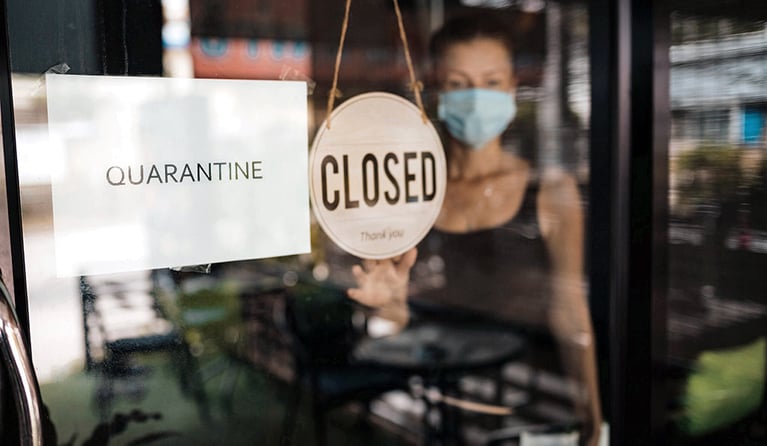
WorkLife by OpenMoney’s latest Small Business Monitor has revealed that Many SMEs may lack the confidence in their future financial prospects despite government restrictions lifting.
Just a mere 26% of small businesses believe that revenue will increase over the next 12 months, down from 31% when WorkLife last undertook the study in March 2021. Meanwhile almost half (49%) of small businesses expect income will reduce, compared with 45% in the Spring. Only a fifth (21%) of SMEs expect revenue to remain stable.
On average, small businesses expect to be back to pre-pandemic levels of income within 10 months of government restrictions lifting. A third (35%) think it will take between seven to 12 months, but almost a quarter (23%) believe it will take longer than a year. Some 3% of respondents don’t ever expect it to return.
Against this backdrop, more than three quarters (78%) of SMEs are still using government financial support schemes. A quarter (25%) of respondents remain reliant on the Business Interruption Loan Scheme, while 24% are still making use of Bounce Back Loans and 23% the Job Retention Scheme. Just one in 10 (10%) SMEs who were previously using such arrangements are no longer doing so.
Helping employees manage the impacts of the pandemic on employees’ mental health (17%) and personal finances (15%) remain at the top of the list of challenges SMEs were facing over the next 12 months. However financial and operational concerns are also starting to climb the agenda when compared to earlier in the year, with worries about rising inflation also being cited among the top concerns (16%).
Steve Bee, director of WorkLife by OpenMoney, noted: “Just as our so-called Freedom Day saw the UK being split by those excited to get back out and others more wary of the journey back to normality, SMEs are now falling into two main camps – those feeling renewed optimism and those for whom the future remains far from certain.
“Firms in the latter must remember that their ability to adapt in the face of a crisis is what has kept them going, and this will be no different during the recovery phase. Bosses should therefore be taking stock on what changes – such as alternative products and sales routes or flexible working arrangements – could be implemented longer term to help future proof the business and ensure it is equipped to meet the evolving demands of customers.
“But above all else, businesses must be able to continue relying on those employees who have displayed real loyalty and flexibility during testing times, as their support will be just as vital during the next few months. This needn’t be through direct and expensive remuneration, but rather taking the time to understand their worries and considering what else can be put in place to help them navigate the recovery period and beyond.”


Latest News




HRM Outlook magazine contains all the latest information about the workforce that is necessary to improve the performance of businesses. We hand over various topics, such as talent management, employment law, HR technology, recruitment, diversity, leadership, well-being, etc.
We respect your privacy. The email address you provide will be used solely for subscription purposes and will not be stored or shared.
Subscribe Now